By Molly Maria
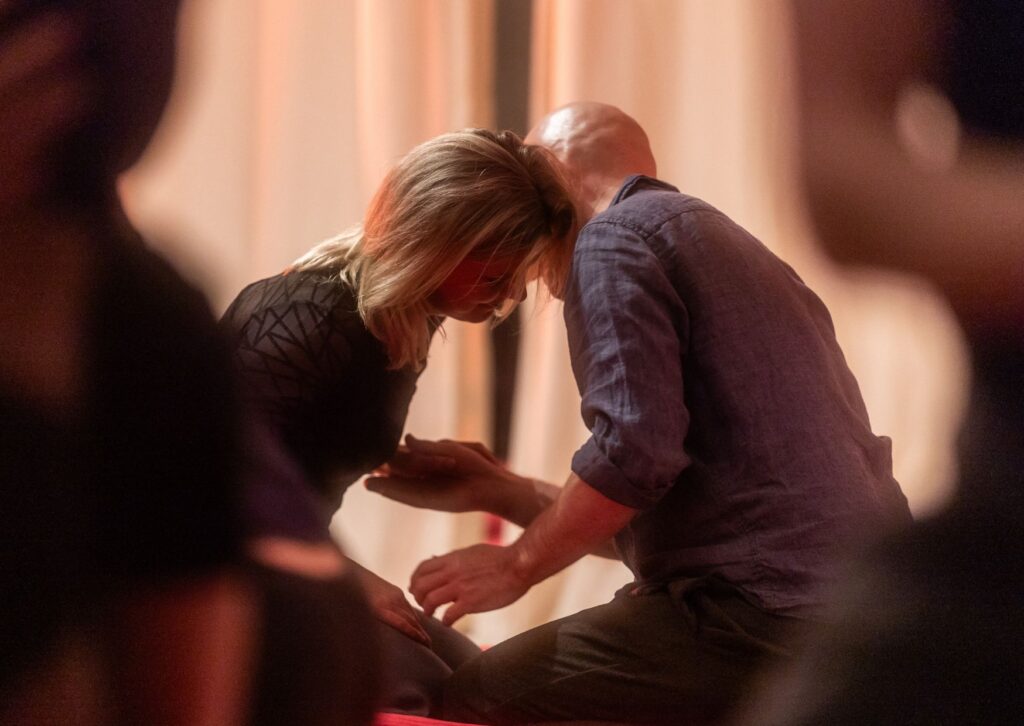
When I use the word embodiment, I mean paying attention to experience as it happens in your body, and allowing that information to take part in your choices. You might notice that you are bracing, leaning towards a touch or saying yes before you have decided.
The word can sound more mysterious than the experience. I use it because thoughts alone do not always describe what is happening. I also want to be careful about what I ask the word to carry.
A sensation does not arrive with an explanation
You may notice warmth, a held breath, restlessness or the wish to move away. Noticing does not tell you automatically what caused it. A sensation is not a diagnosis, proof of a hidden memory or an instruction you must obey.
I would rather make room for a question than supply a confident interpretation: ‘What are you noticing?’ ‘Would you like something different?’ ‘Do you want to pause?’ You are allowed to answer that you do not know yet.
Why rope can give attention a practical focus
Rope has texture, weight and movement. In an appropriate guided practice, those qualities give us something concrete to attend to. You can describe what changes when the practice changes, instead of trying to decide whether you are becoming a different kind of person.
The point is not to endure more sensation. It may be to recognise a preference earlier, ask for a change or discover that you would like to finish. Technical competence and risk awareness remain necessary throughout.
Embodiment is broader than interoception
Interoception is a research term for sensing and interpreting signals from within the body. It is relevant to discussions of bodily experience, but it is not identical to every use of the word embodiment. Rope also involves touch, movement, context and interaction with another person.
Khalsa and colleagues’ research roadmap explains interoception and identifies substantial questions for further study. That research does not establish that Shibari treats a mental-health condition. I do not use a scientific term to lend certainty to a claim it has not tested.
My professional scope
I am studying psychology. My rope teaching and guided sessions are not psychotherapy, diagnosis or trauma treatment. If you need clinical support, a suitably qualified professional is the appropriate person to discuss that with.
You may find a session meaningful, enjoyable, uncomfortable or simply interesting. No particular response is evidence that the work has succeeded or failed. I will not ask you to describe an ordinary experience as a breakthrough.
You can begin without rope
You do not need a session to ask yourself a modest question: ‘Would I like to sit differently?’ Or: ‘Do I want to keep talking about this?’ If attending to your body feels difficult, you can pause and return to something familiar around you. There is no obligation to turn inward.
What interests me is the possibility of making experience easier to describe. Once you can say ‘I would like less pressure’ or ‘I am interested, but not ready’, another person has a better chance of meeting you accurately.