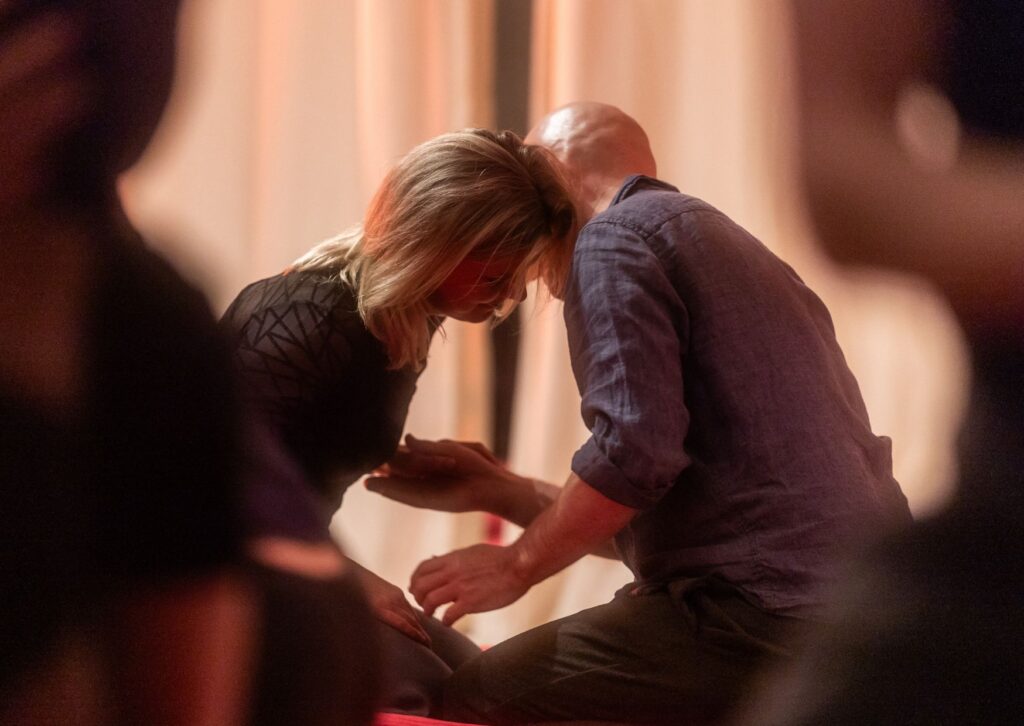
After a Shibari session: care, conversation and space

By Molly Maria
Aftercare is the care people agree to offer and receive after an experience. In Shibari, that might include practical comfort, checking how the body feels, conversation or time without conversation. It is not a universal ritual, and it is not a substitute for medical attention when someone may be injured.
I prefer to discuss it before a session. Afterwards can be an inconvenient moment to discover that one person expects an hour of closeness while the other needs to leave.

Ask instead of assuming

Some people welcome an embrace; others would rather have space. A blanket, a drink or a few ordinary words may be useful. None should be treated as something a person must accept to show that the experience was good.
Ask a specific question: ‘Would you like company or a little space?’ ‘Is touch welcome?’ ‘Do you want to talk now or later?’ The answer can change. Care still involves consent.

Notice the practical details

Leave enough time to come out of the activity without immediately rushing into another obligation. Check that everyone can move comfortably and feels ready for whatever happens next. If someone feels unwell, dizzy or unable to function normally, attend to that rather than assuming they only need reassurance.
Do not explain new numbness, weakness or significant pain as an emotional response. Those symptoms need appropriate attention. My rope-safety guide explains why changes in sensation and movement should be taken seriously.

You do not owe anyone a profound account

You may have a great deal to say. You may have very little. An experience does not become more valuable because you can describe it beautifully.
I would not ask someone to decide immediately what the session means for their relationship or their life. ‘I liked that part.’ ‘I am still thinking.’ ‘I do not want to repeat it.’ Each is a complete and useful response.

Agree what happens later

If you want a later check-in, discuss the timing and the kind of contact both people can reasonably offer. A message the next day may be welcome, but it should not be presumed. In professional work, contact arrangements also need to remain within the boundaries of the service.
You can name a preference without making someone responsible for unlimited availability. Equally, it is better to be honest about what you can offer than to promise ongoing care in a moment of intensity.

When something was not right

Aftercare cannot make a crossed boundary acceptable. If something happened outside the agreement, it deserves to be acknowledged rather than covered over with affection or a reassuring explanation.
If you feel distressed or unsafe, you can seek support from someone you trust, an appropriate professional or a relevant support service. You do not have to keep the matter private to protect the person who led the session. A thoughtful practice makes room for difficult feedback as well as gratitude.

Continue reading