Embodiment begins with noticing what a moment feels like from inside your body. A held breath, a wish to move closer or the pleasure of slower touch can help you choose what you want next. In rope practice, we give those sensations time and words.
Try beginning with something simple: notice your breathing, how you are sitting and whether you want more or less contact. These observations help you describe a preference while it is still easy to act on it.
A sensation does not arrive with an explanation
Warmth, a held breath or the wish to move away can give you a useful question to ask. Describe the sensation first, then choose whether to pause, adjust the practice or continue.
Ask: ‘What are you noticing?’ Then follow with something practical: ‘Would you like less pressure, a slower pace or a pause?’ A specific choice makes it easier to respond to the sensation together.
Why rope can give attention a practical focus
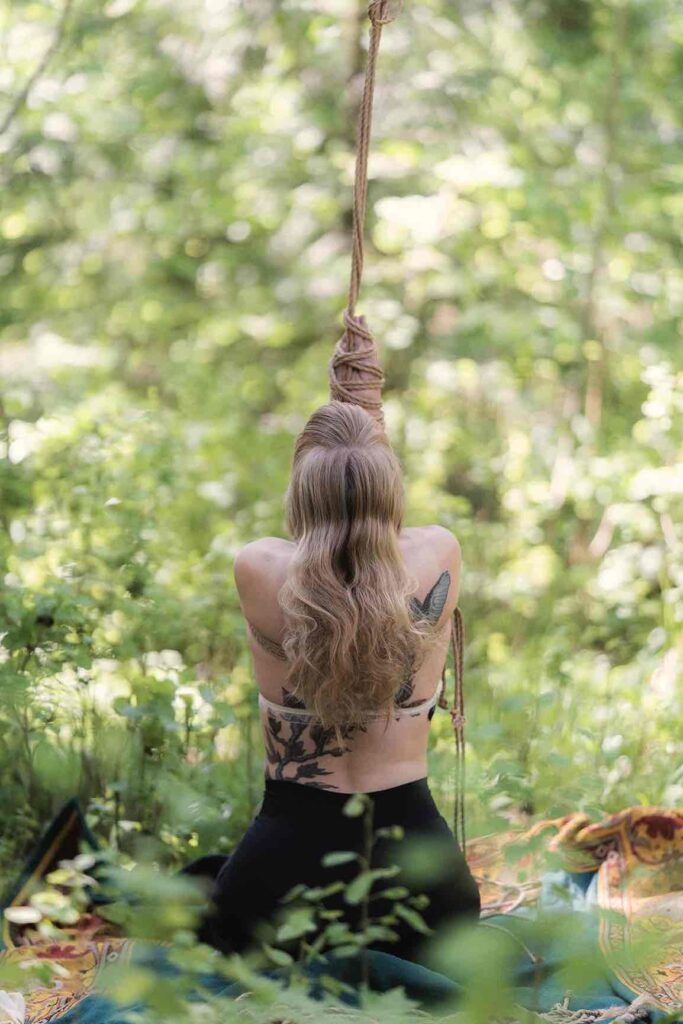
Rope gives attention a concrete focus: its texture against skin, the direction of a pull or the space a tie allows for movement. You can compare what you notice before and after an adjustment and tell your partner what you prefer.
Practise making specific requests: ‘Less pressure here’, ‘Move more slowly’ or ‘I would like to finish’. The person tying responds and checks again. This connects bodily attention with a choice both people can understand.
Embodiment is broader than interoception
The research below explains interoception and the questions researchers are studying. It offers background for the term; my rope teaching focuses on observing sensation and communicating preferences.
Where guided rope practice fits
I teach rope, movement, attention and communication. I am studying to become a psychotherapist; my rope sessions are educational and experiential. Clinical support belongs with an appropriately qualified professional.
After a practice, ask yourself which parts you enjoyed, what you would change and whether you would like to repeat it. A few specific observations give you more to work with next time.
You can begin without rope
Begin with an ordinary choice: shift your seat, notice your feet on the floor or ask whether you would like to keep talking. If focusing inward feels difficult, look around and return to something familiar. You can choose how much attention to give the exercise.
With rope, take the same curiosity into a simple request: ‘Move more slowly’ or ‘I would like to finish.’ Noticing, asking and receiving a response connect your experience with the person beside you.